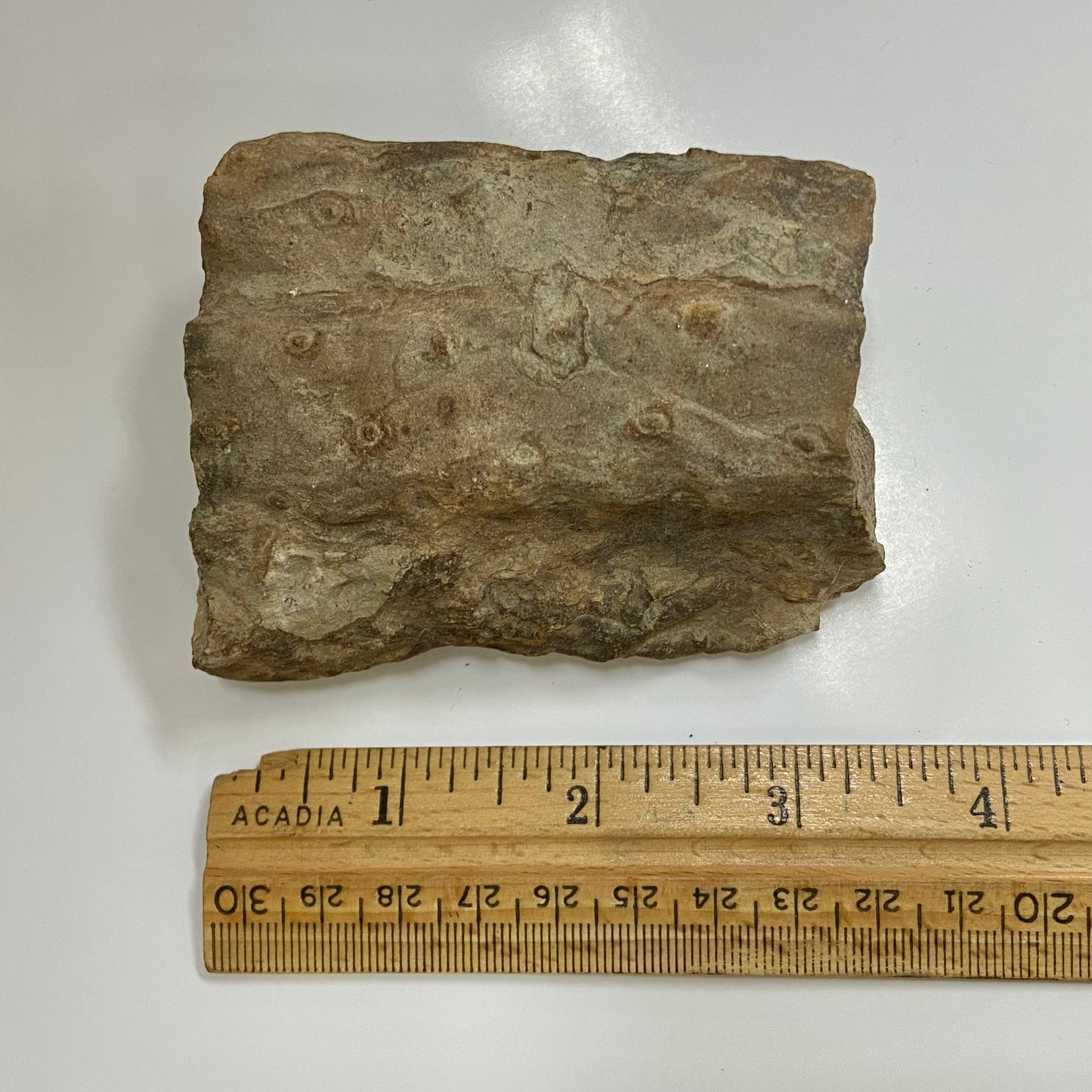
Stigmaria are the fossilized shallow, underground root systems of giant prehistoric tree-like plants called lycopsids, including Lepidodendron.
The stigmaria were complex and branching and comparable to the shoot-like rhizomes of living quillworts. Their fossils are usually long and tubular with oval depressions on the surface where rootlets attached to the main roots. The root systems were shallow with probably 5 or more main roots spreading horizontally from the trunk. Their horizontal rather than vertical growth into the ground was likely due to the swampy and wet environments of which they lived.
Present-day lycopsids are the low growing, vascular clubmosses, quillworts and spikemosses that reproduce through spores like ferns. Prehistoric lycopsids grew over 100 feet tall in swampy wetlands and formed massive forests that overtook the landscapes, eventually participating in the coal deposits.
Type: Stigmaria (Tree Root) Age: Pennsylvanian (300 million years old) Locality: Portersville, Pennsylvania